
The Sign Guide - Reverse Channels (Halo Letters)
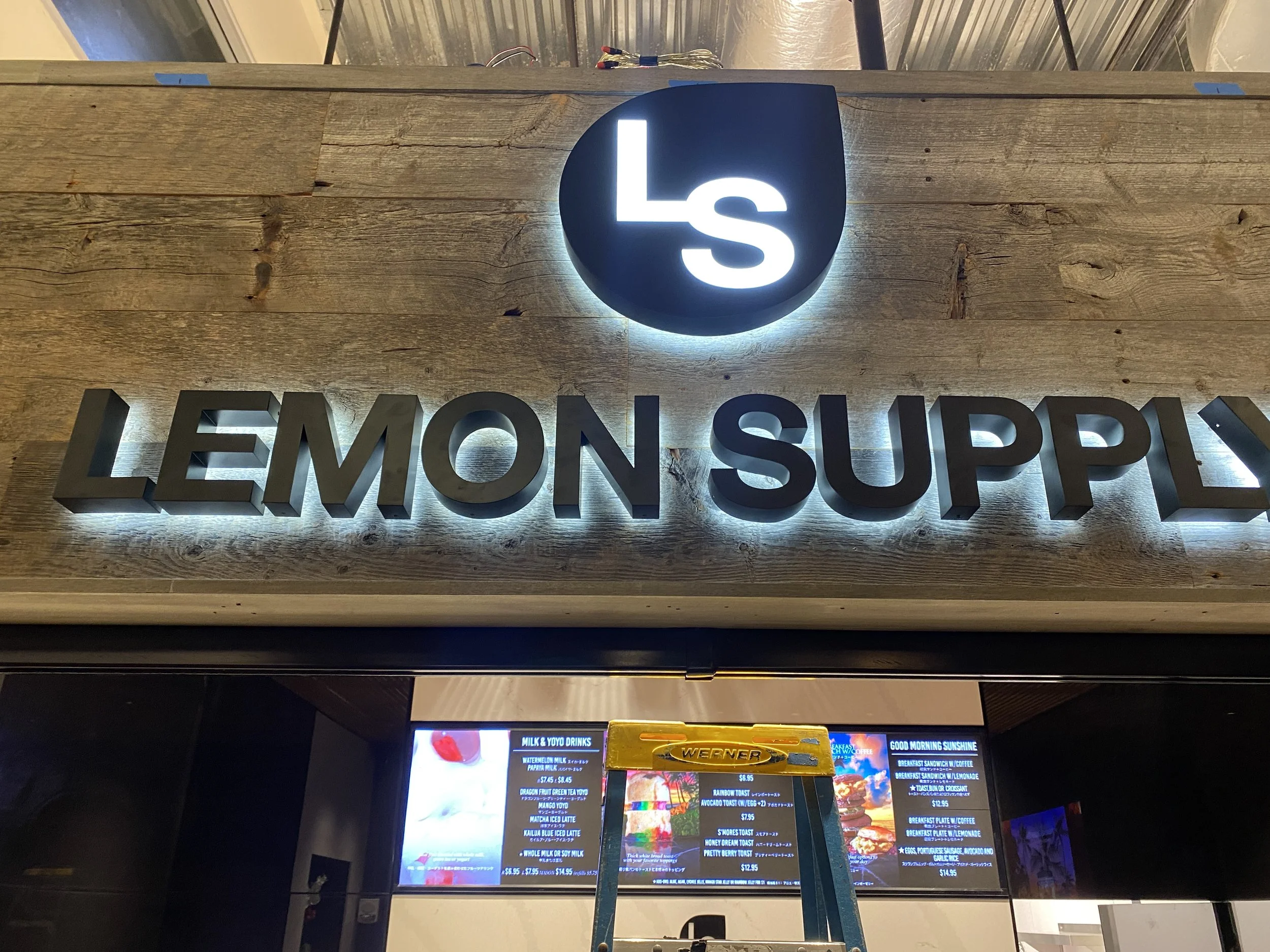
If channel letters are the workhorse of Honolulu storefronts, halo letters are the upscale cousin. Also known as reverse channel letters, halo letters create a soft glow behind each letter rather than illuminating through the face — giving your storefront a sophisticated, architectural look that stands out from the crowd. They're a favorite among higher-end restaurants, hotels, and boutiques, and they happen to be one of the few illuminated sign options allowed in areas where direct illumination is restricted. In this installment of our Sign Guide series, we'll break down exactly what halo letters are, how they work, and when they might be the right fit for your business.
WHAT THEY ARE
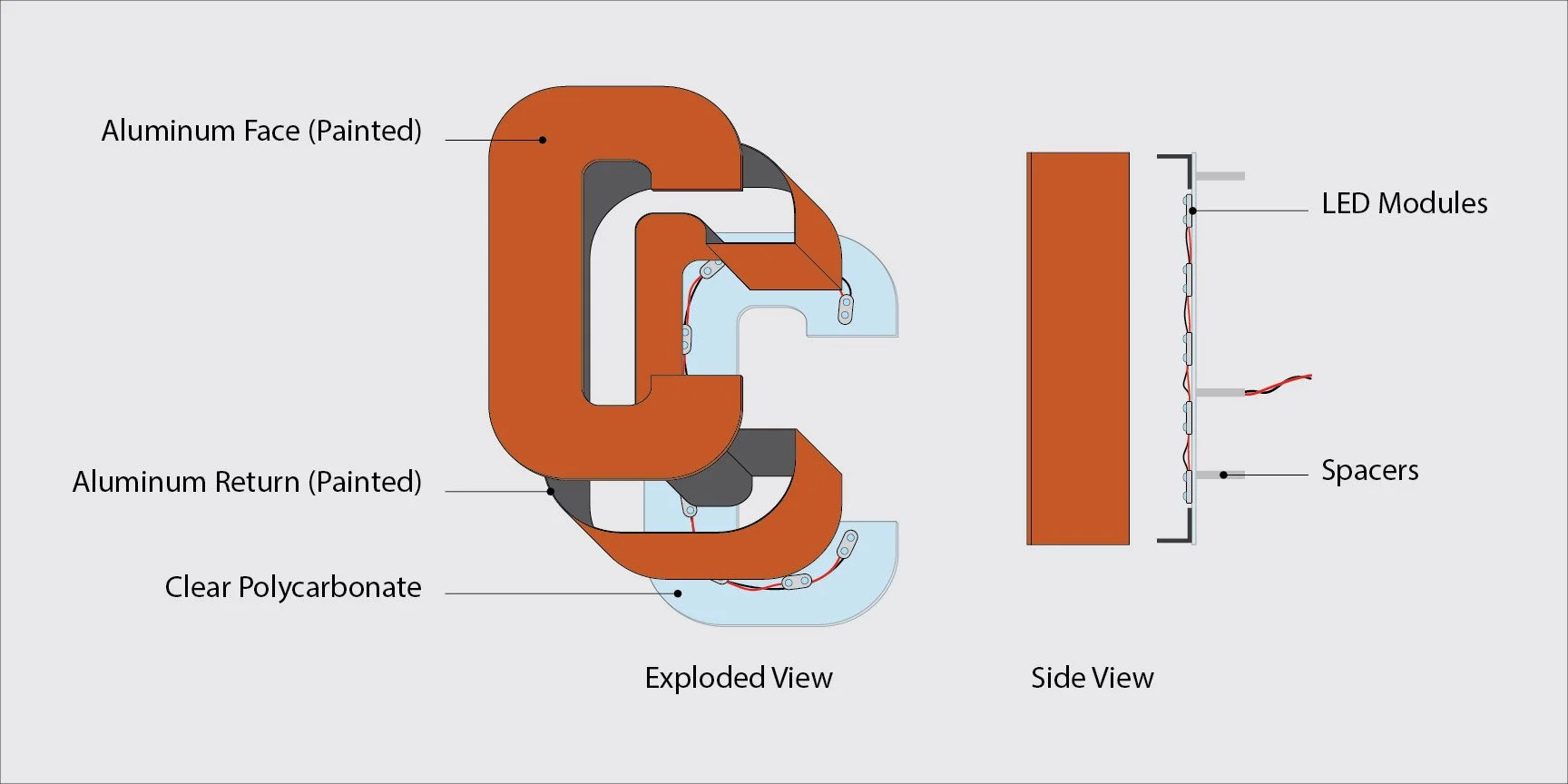
Much like channel letters, halo letters come in two parts: the letter itself, and the back. The letter is made from an aluminum face cut into the letter shape, with a return (the sides of the letter) bent to match the contours of the face. Unlike channel letters where the return is stapled or riveted, halo letter returns are welded to the face for a secure and seamless finish.
The back is made from clear polycarbonate for strength and crack resistance, and is mounted to the wall with a spacer that holds it away from the surface by a predetermined amount — this gap is what creates the halo effect. For illuminated letters, the LEDs are mounted inside the letter pointing toward the wall, where the light is reflected back to create a soft, diffused glow around each letter shape. Because the light never shines through the face, halo letters are considered indirect illumination — an important distinction in areas with signage restrictions.
HOW THEY WORK
Each letter back is mounted directly to the wall using a paper pattern as a template to ensure correct alignment and spacing. For illuminated halo letters, each letter has its own wiring that is fed through the back and into the wall. The letter is then attached to the back using a tab and a painted screw through the return.
Access to the back of the letters is required to complete the electrical connections and hook up to the main power. In most cases this is accounted for in the building design, assuming the letters go in the typical sign location. In more unique circumstances, accommodations may need to be made for wiring and electrical hookup. If you're unsure whether you have access, contact us for a site inspection and we can go over your options with you.
The individual wires from each letter are brought together and connected to an LED driver that outputs the 12v DC power required for the LED modules to function. Each driver can only support a select number of LED modules, so the larger a sign is — or the more parts it has — the more drivers will be needed. The drivers are then connected to the main power, and most signs are controlled by either a timer or a solar cell that deactivates the sign during the day and activates it at night.
WHEN TO USE HALO LETTERS
Halo letters are a versatile and premium option for storefront signage. Fabrication is more involved than channel letters — each letter is individually welded and often requires body work to achieve a seamless appearance — but the result is a refined, high-end look that's hard to replicate any other way.
Halo letters are a great fit when you want:
A premium, upscale aesthetic — The soft glow behind each letter creates an architectural, sophisticated look that feels right at home on a boutique, hotel, or fine dining restaurant. It's a step above the standard illuminated storefront sign.
Indirect illumination in restricted areas — Unlike channel letters, halo letters don't illuminate through the face, which classifies them as indirect illumination. This makes them one of the few lit sign options available in areas like the Waikiki special district where direct illumination isn't permitted.
High visibility day and night — The halo effect is subtle during the day but striking after dark, giving your business a visible presence during evening hours without an overpowering commercial look.
Durability in Hawaii's climate — Built from aluminum and polycarbonate, halo letters are designed to hold up against Hawaii's heat, humidity, and salt air for years to come.
HALO LETTERS AT A GLANCE
Pros:
Premium aesthetic — The soft halo glow creates a sophisticated, architectural look that elevates your storefront above typical illuminated signage
Indirect illumination — Qualifies as indirect lighting, making halo letters an option in areas where direct illumination is restricted, including parts of Waikiki
Professional appearance — The welded, seamless construction gives halo letters a polished, high-end finish
Fully customizable — Available in virtually any font, color, shape, or logo design to match your brand
Durable— Built from aluminum and polycarbonate, designed to withstand Hawaii's heat, humidity, and salt air
Versatile — Works on most storefront types and wall surfaces
Cons:
Higher upfront cost — Halo letters require more fabrication than channel letters, including welding and body work, so the initial investment is greater
Electrical requirements— Illuminated letters need wiring and power access, which can add complexity and cost depending on your building setup
Permit requirements— Like most exterior signage in Honolulu, halo letters typically require permits before installation
Maintenance— LEDs and drivers are long lasting but may eventually need replacing
CONCLUSION
Halo letters bring a level of refinement to storefront signage that's tough to match. The indirect glow, seamless construction, and upscale aesthetic make them a natural choice for businesses that want to make a strong impression — and a practical one for anyone navigating signage restrictions in areas like Waikiki. If you think halo letters might be the right fit for your business, we'd love to help you explore the options. Reach out to our team for a free consultation and let's get your business noticed.
